
By Dr. Sean Olenek, D.C. · Insight Chiropractic Health and Wellness Center, Maitland, FL
So much of what we do at Insight comes back to one idea: helping your nervous system regulate. Your brain and spinal cord run everything else in your body. When they’re under strain, you feel it everywhere: in your sleep, your energy, your neck, your head, your mood.
That’s why we look for approaches that are powerful, specific, and gentle. CranioSacral Therapy checks all three boxes. Starting October 26, it’s part of what we offer, with Ash Brown, LMT, FH.
What is CranioSacral Therapy?
CranioSacral Therapy (CST) is a light-touch, hands-on therapy. It was developed by Dr. John E. Upledger, an osteopathic physician, after extensive clinical research at Michigan State University. The Upledger Institute has since trained more than 125,000 therapists around the world.
The name comes from the craniosacral system: the membranes and fluid that surround, protect, and nourish your brain and spinal cord. (“Cranio” is your skull. “Sacral” is your sacrum, the bone at the base of your spine.)
Every day your body takes on stresses and strains: an old fall, long hours at a desk, a hard week, a bad night’s sleep. Your body is smart, and it compensates. But over time those compensations can tighten the tissues around the craniosacral system and create tension around your brain and spinal cord. That tension gets in the way of your nervous system doing its job, and potentially every system it talks to.
How it works
A CST therapist uses about 5 grams of pressure. That’s roughly the weight of a nickel. With that light touch, she feels different places on your body to check the ease of motion and the rhythm of the fluid pulsing around your brain and spinal cord. Where things feel restricted, she uses gentle techniques to release them.
The goal is to improve the environment around your brain and spinal cord so your body can do what it already knows how to do: self-correct.
The one thing I want you to understand
Profound shifts can happen with very subtle pressure.
That surprises a lot of people, especially if you’re used to thinking “harder is better.” Here’s how I explain it to patients: if your body is a machine, CST is like going straight into the circuit board to upgrade its software. You’re not forcing anything. You’re working where the instructions come from.
Who can it help?
Many of the things we hear about from our patients every day are exactly where CST can help. According to the Upledger Institute, patients report relief from symptoms associated with:
- Headaches and migraines
- Neck and back pain
- TMJ (jaw) problems
- Stress and tension-related problems
- Chronic fatigue
- Fibromyalgia
- Concussion and traumatic brain injury
- Post-traumatic stress
- Scoliosis and orthopedic problems
- Spinal cord injuries and central nervous system disorders
- Autism
- Childhood issues
- Recovery during cancer treatment
CST works alongside your body’s natural healing processes. It isn’t a replacement for care from your medical team. It’s also a good choice for preventive care, so almost anyone can benefit from a session.
One note on children. Ash provides CranioSacral Therapy to patients aged 9 and up. For ages 2 to 8, she offers Touch Therapy instead — the same gentle, consent-led approach, suited to a younger child. Call us and we’ll book you into the right appointment.
What a session is like
Your first visit with Ash is 90 minutes, and it is worth knowing how that splits. The first 30 minutes are a detailed intake — a real conversation about your history, your sleep, your stress load and what you have already tried. The next 60 minutes are hands-on CranioSacral Therapy. The intake is added to your session rather than taken out of it, so you still get the full hour on the table that every follow-up gets. Follow-up sessions are 60 minutes. You stay fully clothed and lie on a comfortable table in a quiet, private room. Ash starts by “listening” to your body with her hands, feeling for tension patterns and imbalances, and lets your body’s responses guide the pace.
Everyone experiences it a little differently. Some people feel deeply relaxed. Others feel a sense of “unwinding” as tension lets go. Once in a while, a memory of an old injury or a stressful time comes up. This is called SomatoEmotional Release. It doesn’t happen every time, and it’s perfectly normal when it does.
Afterward, you may feel relaxed enough to sleep for hours, or you may leave with a burst of energy. Patients often feel the shift on two levels: physically, as pain and tension let go, and emotionally, as a calmer, more settled nervous system. Because CST supports your body’s own healing processes, many patients find those benefits keep building for weeks after a session.
Is CST right for everyone?
Almost everyone, but not quite. CST isn’t recommended for conditions where a small change in pressure inside the skull could cause instability: an acute aneurysm, a recent skull fracture, or a brain bleed or other severe bleeding disorder. If you’re not sure whether one of these applies to you, check with your physician first.
Welcome Ash Brown, LMT, FH
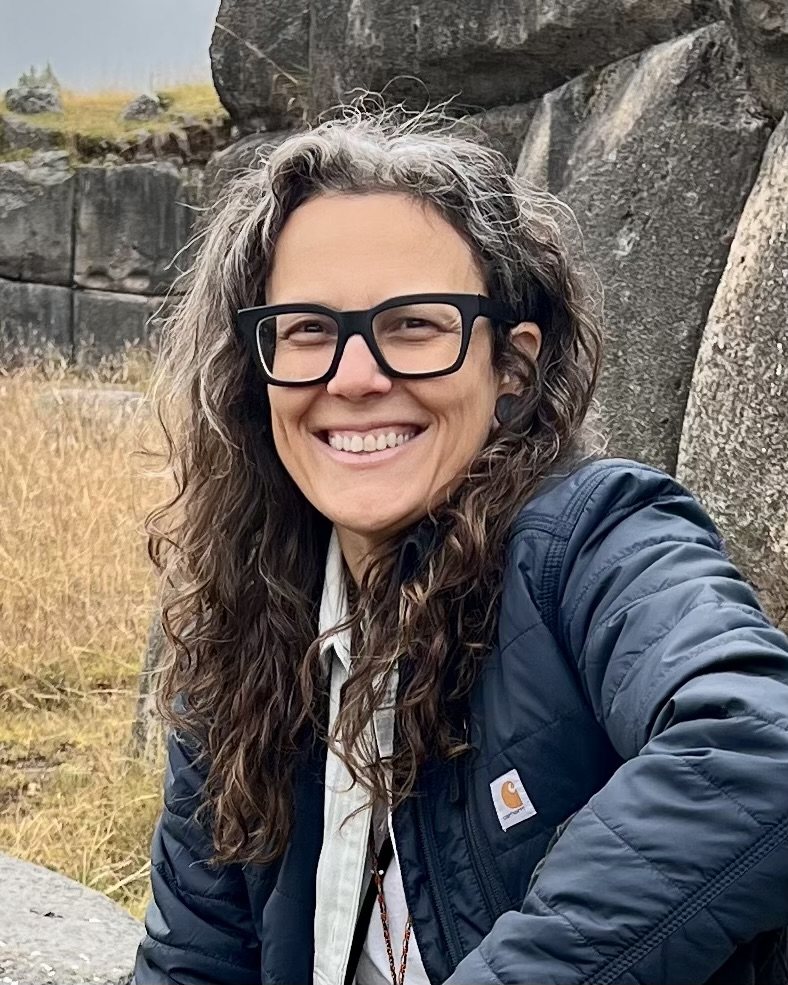
Ash is an Upledger-trained Licensed Massage Therapist whose practice centers on CranioSacral Therapy. She has 20 years of experience across conventional and integrative health. Her own path through significant health challenges led her to train in the approaches that meant the most in her healing, and it shows in how she works.
Her sessions center on gentle touch, deep somatic listening, and care for the whole person. Her work is also informed by her background in clinical herbalism and Somatic Therapy, plus a foundation in functional medicine and functional neurology. She holds pediatric massage certifications too, including advanced training for children with additional medical needs and specialized training in autism and trauma.
Alongside her clinical work, Ash teaches Pathology, Energetics, Aromatherapy, and CranioSacral Therapy at the Central Florida School of Massage Therapy. Outside the office, you’ll find her sharing good food with family and friends, befriending animals, camping, out on the river, or making art.
My wife, Courtney, had a session with Ash. Here’s how she described it:
“Working with Ash was truly transformative. From the moment we began, her warm, generous demeanor and deep knowledge of CranioSacral Therapy immediately made me feel safe and comfortable. The experience itself was cathartic, powerful, and honestly one of the best gifts I’ve ever received.
As my nervous system shifted into a state of deep calm, safety, and processing, I experienced a profound somatic response—seeing vivid colors and geometric shapes, alongside a beautiful, rewritten memory with a loved one who has passed that brought me immense peace and a whole new perspective. Days later, I still find myself able to return to that exact place of calm.
I left feeling released of stress and tension—energized, creative, and deeply aligned. That creative energy has stayed with me long after the session ended. I am so excited for others to begin their own healing journey with this immensely powerful work. Be open to expanse and alignment!”
— Courtney Olenek
Everyone’s experience is different. Not every session looks like Courtney’s, and that’s normal.
Try this tonight
Lie on your back for five minutes with one hand on your belly and the other on your chest. Breathe in slowly through your nose and let the breath sink down toward your belly, so the hand on your abdomen rises while the hand on your chest stays mostly still. That’s diaphragmatic breathing: your diaphragm, the dome-shaped muscle under your lungs, doing the work instead of your neck and shoulders.
Then let each exhale run a little longer than your inhale. Breathing low and slow, with a long exhale, is one of the simplest signals you can send your nervous system that it’s safe to settle down.
Booking with Ash
Ash sees patients Mondays and Thursdays, plus one Saturday a month. Your first visit is 90 minutes — a 30-minute detailed intake plus a full 60-minute session. Each session after that is 60 minutes, and packages are available once your first visit is complete. We accept cash, check, credit card, and FSA/HSA, and we can give you a superbill to submit to your insurance as an out-of-network provider. Call us on (321) 926-2997 for current pricing.
If you’ve been carrying tension you can’t seem to shake, come meet Ash. Let’s take a look.
Insight Chiropractic Health and Wellness Center · 1551 Sandspur Road, Suite 101, Maitland, FL 32751 · (321) 926-2997